
 |
| |
Curtiss-Wright
Corporation (NYSE: CW) has
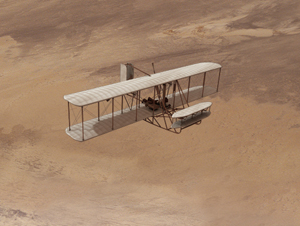
a long history with its roots dating back to the Wright brothers' first flight
in 1903. Curtiss-Wright has continued on the path innovation and advanced
engineering, and have applied that expertise to a number of critical applications
in high performance markets. Our success has resulted in a world-renowned reputation
for performance, long-standing customer relationships and significant growth
and profitability in the markets in which we compete.
Timeline (mouse-over event for historic photos)
 |
| 1907 |
 |
 |
| 1908 |
 |
 |
| 1910 |
 |
 |
| 1911 |
 |
| 1914 |
 |
 |
| 1916 |
 |
 |
| 1917 |
 |
 |
| 1920 |
 |
 |
| 1927 |
 |
 |
| 1929 |
 |
 |
| 1930 |
 |
 |
| 1935 |
 |
 |
| 1937 |
 |
 |
| 1940 |
 |
 |
| 1941 |
 |
 |
| 1942 |
 |
 |
| 1945 |
 |
 |
| 1948 |
 |
 |
| 1960 |
 |
 |
| 1968 |
 |
 |
| 1978 |
 |
 |
| 1990 |
 |
 |
| 1997 |
 |
 |
| 2002 |
 |
 |
| 2006 |
|
 |
First Flight: December 17, 1903, amid the dunes of Kitty Hawk, North Carolina, Wilbur and Orville Wright achieve one of civilized man's fondest dreams - flight. Also occurring that year, Glenn Curtiss sets a world land speed record of 64 miles per hour with a 40HP V8 powered motorcycle of his own design.
Alexander Graham Bell persuades Glenn Curtiss to join his Aerial Experiment Association.
Glenn Curtiss builds his own aircraft and in 1908 the AEA "June Bug" takes to the air as the first "official" airplane flight.
Glenn
Curtiss flies from Albany, New York, along the Hudson River,
to New York City, a feat of 137 mph in just less than 153 minutes, averaging
55mph and winning the $10,000 purse prize posted by publisher Joseph Pulitzer.
He then flew over Manhattan Island and circled the Statue of Liberty. Also
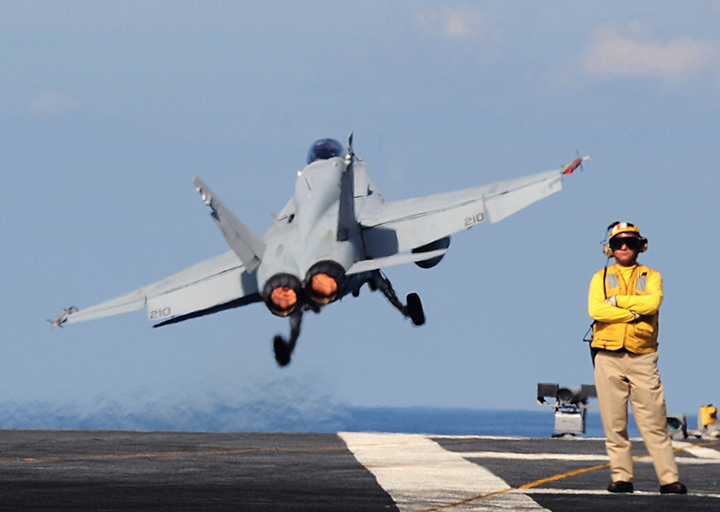
in 1910, the U.S. Navy expresses interest in military aircraft and Curtiss
sets up shop in San Diego to work with U.S. Navy to develop naval aircraft
requirements for his Model D biplane to be launched from the USS Birmingham,
the first
carrier launch of an airplane.

January 18, sees the first carrier landing, Curtiss produces the Triad A-1 seaplane with both wheels and pontoons for purchase by the U.S. Navy and a number of other governments around the world. Glenn Curtiss becomes the first person to receive air pilot license. License #1 is issued by the Aero Club of America on June 9, 1911. (Wright Brothers license were numbers 4 and 5.)

Glenn Curtiss produces the two seat "Flying Fish" aircraft. Wilbur Wright dies at age 45, of Typhoid fever, on May 12, 1912.

Glenn Curtiss produces the larger H-4 "America" flying boat with two engines, with several models purchased by the Royal Navy at the outset of World War One.

Glenn Curtiss begins manufacturing of the JN-4 "Jenny", the most famous North American Aircraft in WWI, for the U.S. Army with thousands sold to the United States, Britain and Canada. Curtiss employs more than 21,000 workers in Buffalo and Hammondsport, New York, producing more than 10,000 aircraft.

U.S. Navy requisitions NC-4 long-range four engine flying boat to hold crew of five.

Curtiss Factory in Garden City, Long Island is opened

Curtiss Seaplanes win the Schneider Cup with speeds approaching 180 mph.

Wright Aeronautical introduces the Cyclone engine.

Orville Wright sells Wright Aeronautical Company to Curtiss Aeroplane and Motor Company on July 5. Curtiss-Wright Corporation was formed with the merger of 12 Wright and Curtiss affiliated companies on July 5, 1929. On August 22nd of that same year, Curtiss-Wright Corporation is listed on the New York Stock Exchange.

Glenn Curtiss dies at the age of 52, following complications from appendix surgery and is buried in Pleasant Valley Cemetery, Hammondsport, New York.
The redesigned Wright cyclone is released as the 14 cylinder Wright R-2600, and becomes the most dominating aircraft engine then and into WWII.
Curtiss-Wright develops the Curtiss P-36 Hawk Fighter Plane, tested and accepted by the U. S. Army. It results in the largest peacetime aircraft order ever given by the Army Air Corps. The Wright R-2250 18 cylinder engine is released and dominated WWII allied airplane engine installations.

Curtiss-Wright opens state-of-the-art research laboratory with pioneering high velocity wind tunnel and large altitude chamber (lab later donated to Cornell University).

WWII: Curtiss-Wright leads the world in the production of aircraft engines, producing 142,840 engines for 13,789 P-40 Warhawk airplanes, with a complement of 146,468 propellers, while employing more than 43,000 employees. Curtiss-Wright constructed more than 29,000 airplanes during WWII, including the Curtiss Commando transport and the Navy dive bomber, the Helldiver.

Work begins on the Wright R-3350, 18 cylinder "Duplex-Cyclone" turbo-compound radial piston engines, with 16 foot propeller, for the Boeing B-29 Super fortress.

War's End: By the end of WWII, Curtiss-Wright becomes the second largest U.S. company (General Motors remains first), with production facilities in Buffalo NY, St. Louis MO, Indianapolis IN, Louisville KY, Columbus and Cincinnati OH, Patterson, Woodridge, Clifton and Caldwell, NJ.

Orville Wright dies of heart failure, at age 76, on January 30, 1948.
1953: Douglas DC-7 is introduced in May of that year with now fully perfected Wright R-3350, one of the post powerful radial aircraft engines ever produced in the United States, delivering up to 3,700 HP.

With the demise of the large production piston aircraft engine, Curtiss-Wright explores new industries to expand and replace products and services.

Curtiss-Wright expands into metal improvements markets with "MI" Metal Improvements business segment.

Curtiss-Wright
refocuses on aviation business, within aircraft component
maintenance, repair, overhaul, refurbishment and re-engineering.
.
Glenn Curtiss inducted into the Motorsports Hall of Fame of America
.
Curtiss-Wright forms Curtiss-Wright Flow Control around Target Rock acquisition (see below panel for details). Curtiss-Wright celebrates 75th anniversary.

Curtiss-Wright Controls expands into embedded computing market, with acquisition of Vista Controls, Penny & Giles and Autronics,

2006 Glenn Curtiss is inducted into Long Island Technology hall of Fame (click here for more).

|
|

| |
| |
From
piston engines to critical needs:
After the end of WWII (click above fold for Curtiss Wright
corporate history), Curtiss-Wright began to move away from its piston-based
airplane engine manufacturing and started expanding into other markets to support
the United State's Navy's nuclear program, beginning with the purchase
of Target Rock.
Timeline (mouse-over event for historic
photos, click logos to view company web sites)
 |
 |
| 1961 |
 |
 |
| 1997 |
 |
 |
| 1998 |
 |
 |
| 1999 |
 |
 |
| 2001 |
 |
 |
| 2002 |
 |
 |
| 2003 |
 |
 |
| 2004 |
 |
 |
| 2005 |
 |
 |
| 2006 |
 |
 |
| 2007 |
|
 |
Curtiss-Wright acquires and expands into the flow control market, supporting U.S. Naval nuclear program.

Curtiss-Wright Flow Control business segment is formed around the original Target Rock company.

First acquisition is completed: . The company is a major supplier of valves, actuators, pumps, motors, snubbers, instrumentation, diagnostic and test equipment, service and repair, and engineering services to the nuclear power industry.

Engineering and are acquired. Farris is a world leader in the design and production of a wide range of spring-loaded and pilot-operated pressure relief valves. They are used as safety devices to prevent over-pressurization of vessels, pipelines, and equipment. Sprague Products provides a variety of air-operated, high pressure pumps and boosters and pneumatic and hydraulic valves.

In a busy year, four new companies join the Curtiss-Wright Flow Control family.
(Solent & Pratt),
based in the U.K., is a world leader in manufacturing high performance butterfly
valves. is
a provider of state-of-the-art electronic components, systems and software used
in U.S. Navy nuclear propulsion plant systems for both submarines and aircraft
carriers. specializes
in the design, engineering, and manufacture of critical-service industrial valves
and related equipment, including the DeltaGuardŽ series of delayed coking unheading
systems. Finally, Curtiss-Wright Flow Control forms a joint venture with SPLAV
of Russia to become (Solenoid
Valve), a recognized leader in supplying valves to the commercial nuclear
power, power and Process markets in Eastern Europe. SV supplies solenoid and
relief valves designed by Target Rock.

Curtiss-Wright Flow Control and of
Korea launch a joint venture forming a Curtiss-Wright Korea KPS business
unit. (Electro-Mechanical
Division) is acquired. It manufactures and designs the most advanced pumps,
motors, generators, propulsors, mechanical seals, control rod drive mechanisms
and power conditioning electronics available to the U.S. Navy, commercial nuclear
power markets and Process industries. Also this same year, is
acquired. The company designs and manufactures highly engineered, critical
function electro-mechanical solutions for the U.S. Navy, commercial nuclear
power utilities, petrochemical, and hazardous waste industries. Finally, International is
purchased to expand presence in the petrochemical/refinery industry with its
metal seated industrial gate valves, butterfly valves, flapper valves, actuators,
and internal components.

begins to be
developed (from Imes Engineering acquisition). It offers integrated solutions for
all phases of process safety management compliance
programs, including iPRSMŽ for Process Safety Management
Software for oil and gas as well as all other processing
industries.

(Engineered
Pump Division) is purchased to provide technologically
advanced, highly engineered pumping solutions to
the U.S. Navy, U.S. Coast Guard, Military Sealift
Command, commercial marine, and foreign military
programs. Three other acquisitions that same year
include Machine
Products, and .
Nova Machine Products is a major supplier of nuclear
quality and bolting solutions to nuclear power plants,
the Department of Energy, Original Equipment Manufacturers
(OEMs) and Accessory and Equipment (A&E) firms that
support the nuclear power industry. TRENTEC is an
internationally recognized leader in nuclear facility
replacement parts, diamond wire concrete cutting
services, airlocks, hatches and specialty doors,
electrical control systems and custom fabrication.
They are the leading providers of equipment qualification
and dedication services, operating the leading seismic
lab in the nation with a one-of-a-kind-tri-axial
shaker table. GROQUIP is the only single source provider
of pressure process solutions for the petrochemical,
Process processing, power, paper, food/beverage
and pharmaceutical industries.

The HydaNut™ Technology bolting solution and its proprietary technologies are acquired and become part of the Machine product line. This advanced bolding technology offers superior joint integrity in critical high temperature applications while reducing outage time and personnel radiation exposure time.

Four months after the acquisition of Systems,
it merges with TAPCO International (acquired in 2002) to become International.
The merger expands the company's presence in the global oil and gas industry.
It provides high performance, severe service metal seated industrial gate valves,
butterfly valves, flapper valves, actuators, and internal components. Later in
the year, ,
an advanced technology company that manufacturers patented machine condition
monitoring based on ultrasonic "stress wave" measurement was acquired.
New acquisitions include Advanced Controls and Drives, and (Valve Systems and Controls). Benshaw is a leading electrical engineering and manufacturing company, Benshaw provides turnkey motor and machine control and protection solutions for OEM customers. Scientech is a global providers utilities (nuclear and fossil) with hardware, technology, risk and reliability information and process solutions aimed at improving safety and plant performance, efficiency, reliability, and reducing costs. VSC (Valve Systems and Controls) specializes in critical valve, automation, and controls solutions for all facets of flow control operations to the oil and gas market.
|
To request additional or more specific information, please
click here to use the Request Info Form, or phone
us at (631) 293-3800 , Fax: (631) 293-6144.
|
|
 |
| Leadership |
 |
| Our
Mission and Values |
 |
| Our History |
 |
| Beginnings |
 |
| Legal |
 |
| Contact
Us |
|
|
|
 |